

Interview Advice from – UNCG Genetic Counseling Students
Preparing for interviews can be a daunting task no matter your background or level of perceived preparedness for genetic counseling school. Regardless of how you’re feeling heading into interview season, you’re not alone! While we have some pretty great previous Student Perspectives on preparing for interviews (thanks Ryan and Mercedes!), our current students thought it might be helpful to compile some of our experiences and advice to hopefully aid those of you who are preparing to interview with genetic counseling programs (or just want to know what to expect in the future—good for you!).

First of all, there are tons of great online resources for interview prep! My favorite YouTube videos to use as I was going through the admissions process were from Katie Lee, CGC, but keep in mind that there is an abundance of other videos/blogs/etc. related to genetic counseling admissions both on YouTube and beyond. Work those resourcefulness muscles by exploring different types of interview prep advice to find what works best for you!
There’s no singular “best” way to prepare for interviews or to answer interview questions. Part of the purpose of the interview process is to understand the way you think, including the ways you work through difficult topics, approach challenging conversations, and navigate uncertainty. When preparing for interviews, prepare in the way that makes you feel most connected to and comfortable with your “why.”
How and Where to Start
At the risk of sounding like a broken record, there are lots of ways to start. Some folks in our cohort chose to start with the ACGC Practice-Based Competencies for Genetic Counselors both to reinforce their decision that they’d made the right choice and to practice making connections between their own background experiences or knowledge and genetic counseling skills, values, and more. What have these experiences or perspectives taught you about yourself? How has that made you more prepared for genetic counseling school? Make sure you are comfortable with articulating these thought processes!
It can also be helpful to take inventory of what’s important to you, both in terms of your own values and what you need as a student to be successful.
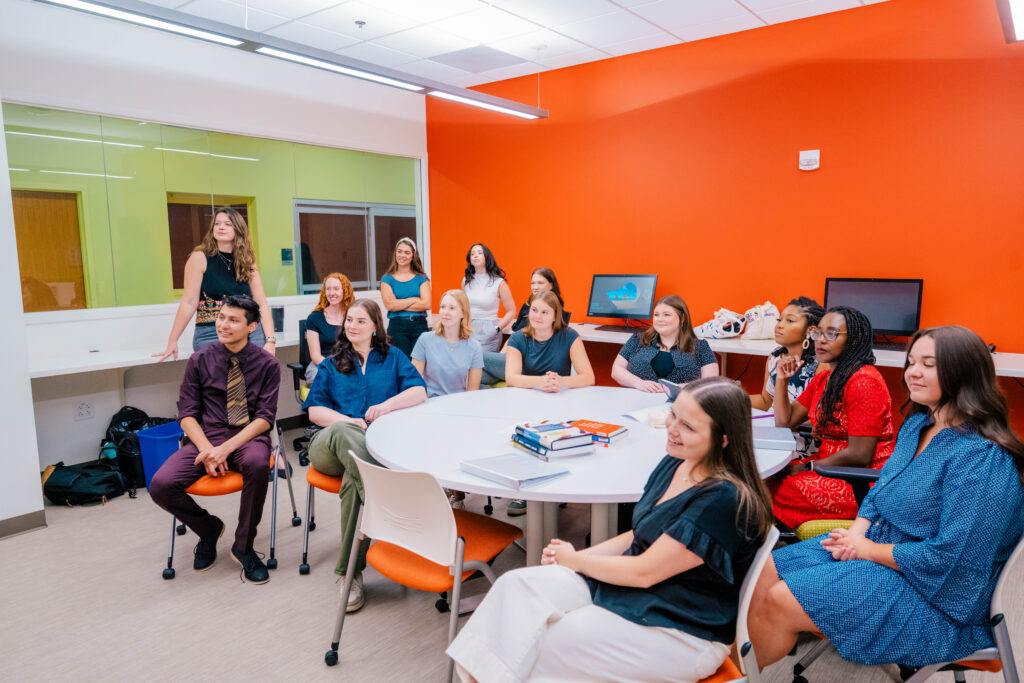
Some of my classmates found that this list of needs and priorities provided a helpful framework for structuring their responses, allowing for more authentic representations of their perspectives and more effective evaluation of how the program’s values aligned with what they were looking for.
Getting to know yourself and your values may seem like an overly simplified or obvious way to start, but you will almost certainly need to not only know but be able to communicate how aspects of your identity and personality have both made you who you are AND prepared you for a graduate program in genetic counseling. Self-reflection is a great skill to have, and one that will continue to benefit you both in GC school and beyond.
For my own interviews, I had a list of these talking points (challenges, learning moments, memorable experiences, etc.) with keywords underneath. This made it easier for me to draw from the list in an interview setting without having to think through each story individually every time. I also practiced talking through these examples beforehand to minimize the possibility of stumbling through details I didn’t remember quite as well as I thought I did.
The Basics
I won’t repeat all of Ryan’s and Mercedes’s advice here, but it can be helpful to refresh yourself on the basics of genetic counseling, including current topics or issues within the field.
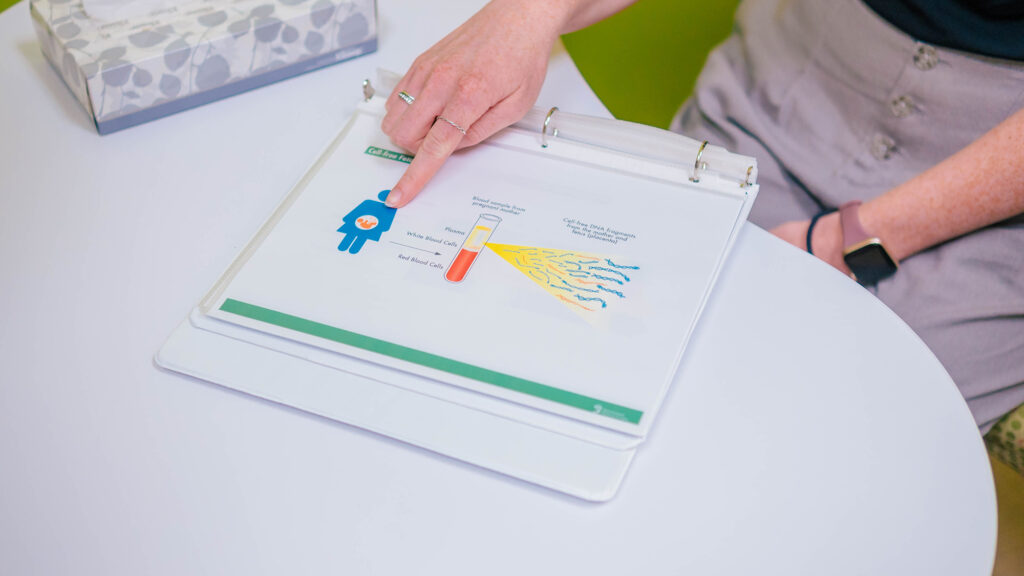
From your perspective, what implications do these topics or events have for genetic counseling practice or the field in general? It can be scary to know that you probably don’t have as much information on the topic as a genetic counselor… but rest assured that the people interviewing you know that. It’s ok to acknowledge where your knowledge may be limited!
Next, do your research on the program you’re interviewing with (including the people you’ll be talking to!). Make sure you’re able to clearly describe why you chose to apply to that specific program. As with any other interview question, don’t feel like you have to give a specific answer or respond in a specific way. However, you should be able to identify clear connections between your background/goals and what that program has to offer.
You’ve probably laid eyes on your application materials more than you’d care to admit, but make sure you’re familiar with and able to talk through every bullet point on your CV and every sentence you wrote in your statements.
I had print copies at my desk during my interviews that came in handy more than once– everything there is fair game!
Practice talking through these connections between your materials and your readiness for a genetic counseling education. Record yourself if it’s helpful to hear your tone, talking speed, or choice of words! Some people write a script for some questions, but I felt that this would limit my ability to be flexible and to tailor my experiences to the specific question being asked. Remember that, at the end of the day, this is a conversation (much like interactions with patients!).
During the Interview
Some general tips:
- Have a glass of water nearby. You’re going to be talking a lot, and it can sometimes be helpful to gather your thoughts in the two seconds it takes to grab a sip of water!
- Breathe. It’s probably better to take a moment to consider what you’re going to say next than to jump straight into your response just to be done with it faster. Take a few deep breaths whenever it’s convenient and remind yourself that you’re here for a reason.
- Take notes. Write down what was asked and how you responded. Some folks wait and do this in the breaks in between interviews, while I preferred to write a “sparknotes” version of the conversation with keywords and then fill in details later in the day. Reflecting on these interactions will help prepare you for the next interview and the notes will be helpful when you’re finalizing your rank list!
- Eliminate distractions. While the extent to which this is possible is different for everyone, try to do virtual interview days in a comfortable environment with minimal distractions. Whether that means hiding in an office in the back of a clinic with a paper Do Not Disturb sign taped to the door (speaking from experience), taking the day off of work entirely, or anything in between, reduce distractions as much as possible to prevent any interruptions to your interviews. And don’t forget to silence your phone!
- Take note of who you should contact for any technical difficulties/emergencies. Programs will usually provide this before or during your interview day—have that information on hand in case you lose connection or encounter any other issues.
Self-Care
Believe me when I say that we know how difficult the application process is. Between hearing about other applicants’ qualifications and having to explain how the match process works for what feels like the billionth time, it can feel all-consuming and overwhelming at times. Acknowledge your feelings about the process – the match process is not for the faint of heart, and by making it here you’ve already proven how passionate you are.
Create structured check-ins and breaks for yourself throughout the application process and remember that no two perspectives are the same.
Finally, remember that you’re here for a reason. It can get easy to get caught up in the overthinking and stress about what follows Match Day. Regardless of the outcome, thoughtfully reflect on what went well and where your “growing edges” are. Keep actively seeking out new perspectives, constructive feedback, and opportunities to improve. Keep reminding yourself of what motivates you, your reason for choosing this field, and that nothing lasts forever—so find joy where you can!